

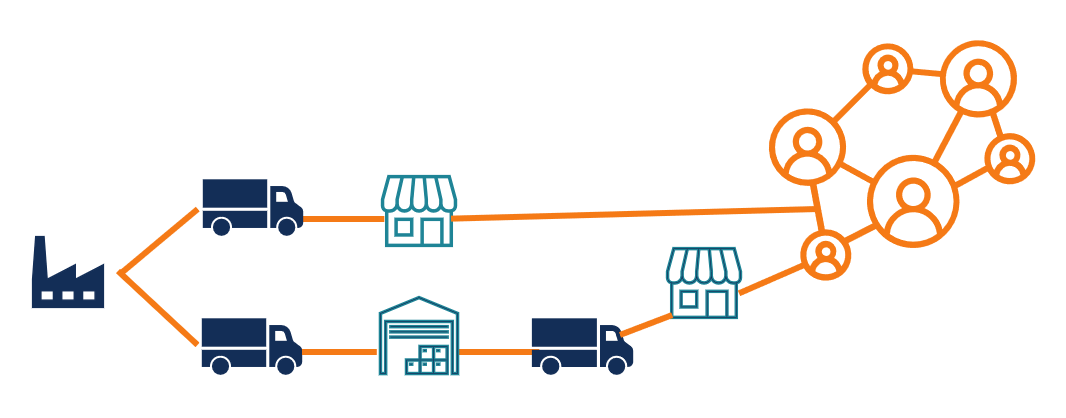





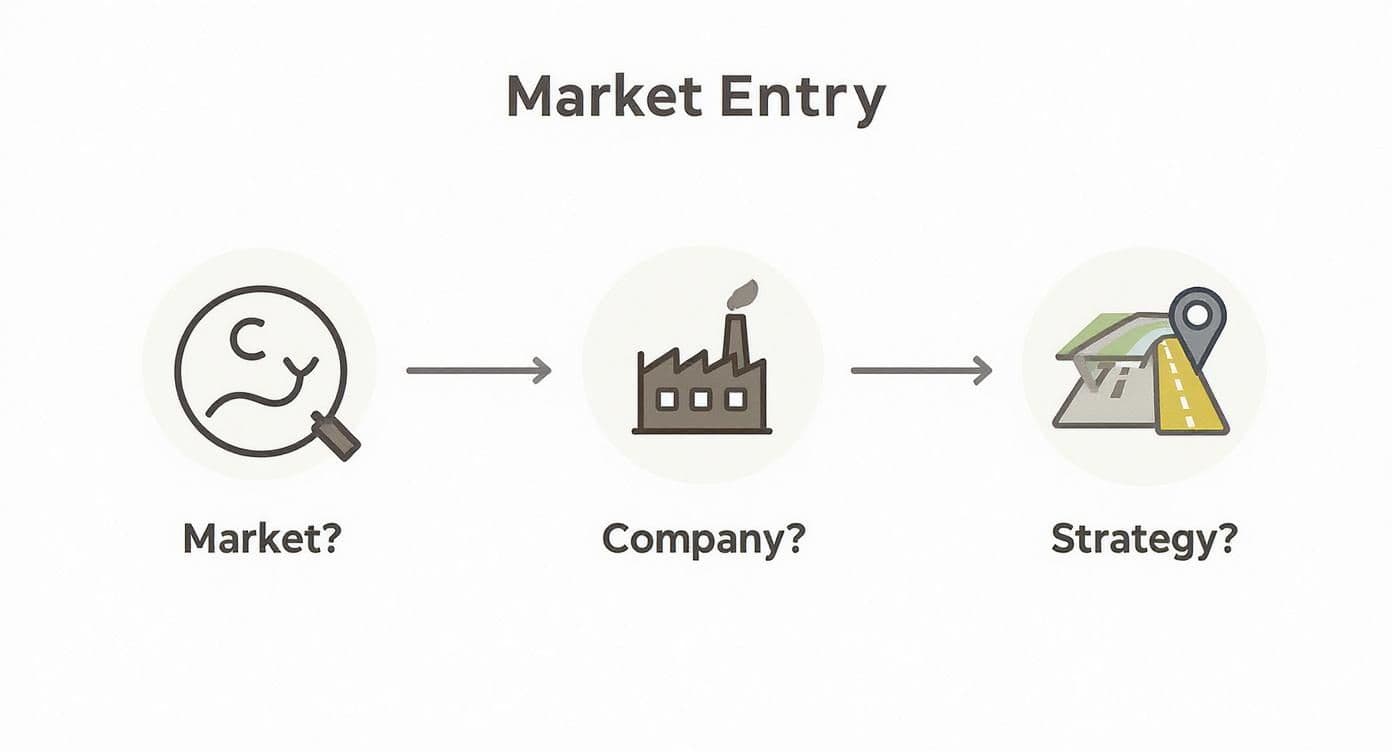
A business entering a new market must decide how its product will reach customers. Two common options are selling directly or working through a local distributor. Neither model is automatically better. The right choice depends on the product, customer base and level of control the company needs.
Choosing the wrong model can make market entry more difficult. A company may spend heavily building its own sales operation when an established distributor could provide faster access. In another case, handing the market to a distributor may limit the control needed to develop important customer relationships.
Understanding the difference helps businesses choose an entry model that fits the market.
Direct Sales Give Businesses More Control
Selling directly allows a company to manage its relationship with customers without another business sitting between them.
This can provide greater control over pricing, customer experience and the way the product is presented. Businesses also receive market feedback directly from buyers, which can be useful when entering a new territory.
Direct sales can work particularly well when the number of customers is limited. An industrial equipment company selling to a small group of factories, for example, may be able to manage those relationships through its own sales team.
However, greater control also brings greater responsibility.
The company must find customers, manage sales activity and understand the local business environment itself.
Distribution Provides Existing Market Access
A local distributor offers something a new entrant may not have: an established route into the market.
The distributor may already supply retailers, pharmacies, dealers or other relevant buyers. Instead of building these connections from the beginning, the manufacturer can use an existing network.
This can be valuable for Fast Moving Consumer Goods (FMCG), where product availability across many sales points can influence performance.
Distribution can also reduce the operational burden on a manufacturer. The local partner may handle parts of the movement and sale of products within the agreed territory.
The trade-off is that the manufacturer gives up some direct control over how the market is managed.
Consider How Customers Buy the Product
The customer’s purchasing behaviour should influence the entry model.
If customers expect to find a product in supermarkets or other retail outlets, a distribution network may be necessary to achieve enough coverage. Selling directly to thousands of individual outlets would require significant local resources.
The situation can be different for specialised products.
Technology systems, engineering solutions or industrial equipment may involve fewer customers and longer sales discussions. Direct engagement can sometimes make more sense because the manufacturer needs to understand each customer’s requirements.
The question is not simply how the company wants to sell. It is how customers in that market already buy.
Calculate the Cost of Both Models
Direct sales can appear attractive because the business does not share part of its margin with a distributor.
However, the company may need local staff, storage facilities and a sales operation to support that model. Those expenses can make direct entry more costly than expected.
Distribution has its own financial considerations. The distributor needs enough commercial incentive to carry and sell the product, which affects the manufacturer’s margin.
Businesses should therefore compare the complete cost of each route before choosing.
Austine & Partners works with companies exploring market access and distribution opportunities across West Africa. This includes helping businesses understand the commercial conditions that can influence how products should enter and move within the region.
Think About the Speed of Market Entry
Building a direct sales presence takes time.
A company entering an unfamiliar country may need to develop customer relationships before meaningful sales begin. An experienced distributor may already have those relationships.
This can shorten the path between market entry and product availability.
Speed, however, should not become the only consideration. A fast entry through a poorly suited distributor can create difficulties later.
Businesses need a route that can support the product beyond its initial launch.
Decide How Much Market Control Matters
Some businesses need close control over the way their products are sold.
A premium fashion brand may want strict standards around presentation. A technology company may require detailed product demonstrations, while an equipment supplier may need technical conversations before a sale can be completed.
Businesses should determine whether a distributor can provide the required level of attention.
If direct customer relationships are central to the business model, direct sales may offer an advantage. Where broad availability matters more, distribution may provide a more practical route.
A Hybrid Approach Can Also Work
The decision does not always have to be entirely direct sales or entirely distribution.
A business may manage certain large customers directly while using distributors to reach a wider market. Another company may begin with a local distributor and establish its own sales presence after gaining a better understanding of the market.
The structure should reflect the commercial objective.
What matters is that responsibilities are clear so that direct and distributor-led sales do not create unnecessary conflict.
Choose the Model the Market Requires
Businesses should avoid selecting an entry model simply because it worked in another country. Markets differ in purchasing behavior, sales channels and operational conditions.
The right approach starts with understanding where customers are and how the product needs to reach them.
For some companies, direct sales will provide the control required to develop the market. For others, an established distributor will provide the reach needed to make products available. In some cases, combining both will be more practical.
Austine & Partners supports businesses assessing routes to market across West Africa, connecting market access decisions with the distribution realities of the region.
To explore the right route to market for your business, connect with Austine & Partners: https://austineandpartners.com/contact/