

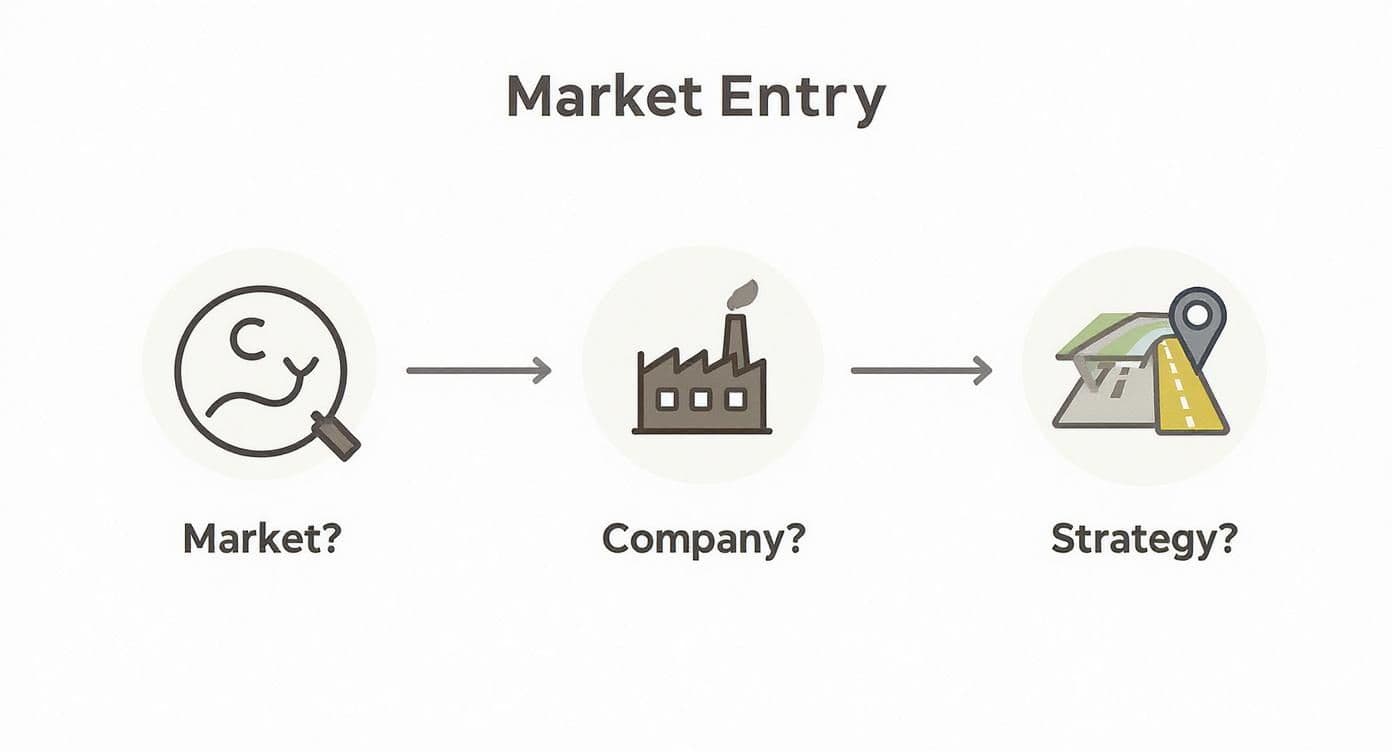






Fast Moving Consumer Goods (FMCG) companies operate in highly competitive markets where consumer preferences can change quickly and distribution networks often determine commercial success. While growth opportunities continue to emerge across developing and mature economies, expansion decisions require more than confidence in a product’s potential. Businesses need reliable insights that help them understand customers, market conditions, and commercial realities before investing resources.
Market intelligence has become increasingly important for FMCG companies because it provides a clearer picture of demand, competition, purchasing behavior, and distribution opportunities. Organizations that use these insights effectively are often better positioned to make informed decisions and reduce the risks associated with expansion.
As competition intensifies across the FMCG sector, businesses are placing greater emphasis on understanding markets before entering them.
Consumer Preferences Influence Market Success
Consumer behavior varies considerably from one market to another.
Products that perform strongly in one country or region may struggle to gain traction elsewhere because purchasing habits, cultural preferences, and price sensitivities differ. Understanding these differences helps FMCG businesses develop strategies that resonate with local consumers.
Market intelligence provides insight into customer expectations and emerging trends. This allows companies to refine product offerings, adjust pricing strategies, and align marketing efforts with market realities.
Businesses that understand their customers are often better equipped to build long-term relationships and strengthen market positioning.
Distribution Opportunities Are Not Always Obvious
Strong demand alone does not guarantee commercial success.
FMCG businesses depend heavily on efficient distribution systems that ensure products remain accessible to consumers. Retail structures, logistics networks, and purchasing channels can differ significantly between markets, making local understanding essential.
Market intelligence helps companies identify gaps within distribution networks and assess whether existing systems can support expansion goals.
Organizations that evaluate these opportunities carefully are often able to improve accessibility while strengthening operational efficiency.
Distribution decisions become more effective when supported by reliable information.
Competitive Analysis Supports Better Decisions
Competition within the FMCG sector is often intense.
Businesses entering new markets need to understand how competitors operate, where they distribute products, and how they position themselves with customers. Market intelligence provides visibility into these activities and helps companies identify opportunities for differentiation.
Understanding competitive environments can influence product positioning, pricing decisions, and expansion strategies.
Companies that monitor market activity regularly are frequently better prepared to adapt to changing conditions.
This awareness often contributes to stronger commercial outcomes.
Local Knowledge Improves Execution
Many FMCG companies underestimate the importance of local insight.
Regulations, retail practices, supply chain structures, and customer expectations can influence how products perform within a market. Organizations that fail to understand these factors may encounter challenges that slow expansion efforts.
Businesses frequently engage companies such as Austine & Partners to strengthen market understanding, identify commercial opportunities, and support distribution strategies designed for sustainable growth.
Access to local expertise often helps businesses make better decisions while reducing uncertainty.
Practical knowledge can significantly improve expansion outcomes.
Market Intelligence Strengthens Partnerships
Partnerships remain an important component of FMCG growth.
Distributors, wholesalers, retailers, and supply chain partners all influence how products reach consumers. Identifying the right partners often requires an understanding of commercial dynamics and market opportunities.
Market intelligence helps businesses evaluate potential relationships and determine which partnerships align with long-term objectives.
Organizations that combine market insights with relationship-building are often better positioned to strengthen market presence and improve product accessibility.
Strong partnerships frequently support more efficient expansion efforts.
Demand Forecasting Supports Sustainability
Growth strategies require accurate planning.
Businesses that underestimate demand may struggle with shortages, while overestimating market potential can create unnecessary costs. Market intelligence helps companies understand consumption patterns and forecast demand more effectively.
This understanding contributes to stronger inventory planning and more efficient resource allocation.
Organizations that base decisions on reliable information are often better prepared to respond to changes in customer behavior and market conditions.
Better forecasting frequently leads to stronger operational performance.
Technology Is Improving Market Visibility
Digital tools continue to transform how FMCG businesses gather and analyze information.
Companies now have access to consumer data, retail insights, industry reports, and performance metrics that help improve decision-making. These capabilities allow organizations to identify opportunities and monitor trends more effectively.
Technology also supports faster responses to changing market conditions.
Businesses that leverage data strategically are often able to strengthen competitiveness while improving commercial outcomes.
Greater visibility frequently contributes to stronger expansion strategies.
Looking Ahead
The FMCG sector continues to evolve, creating opportunities for businesses that understand their customers, strengthen distribution capabilities, and make decisions based on reliable information. Market intelligence plays an important role in helping organizations identify opportunities and navigate increasingly competitive environments.
Companies that invest in market understanding are often better positioned to expand sustainably and improve long-term performance. Through commercial intelligence, market access expertise, and business development support, Austine & Partners helps FMCG businesses evaluate opportunities and build stronger foundations for growth.
To discuss FMCG expansion opportunities and market development strategies, connect with the Austine & Partners team at: https://austineandpartners.com/contact/