

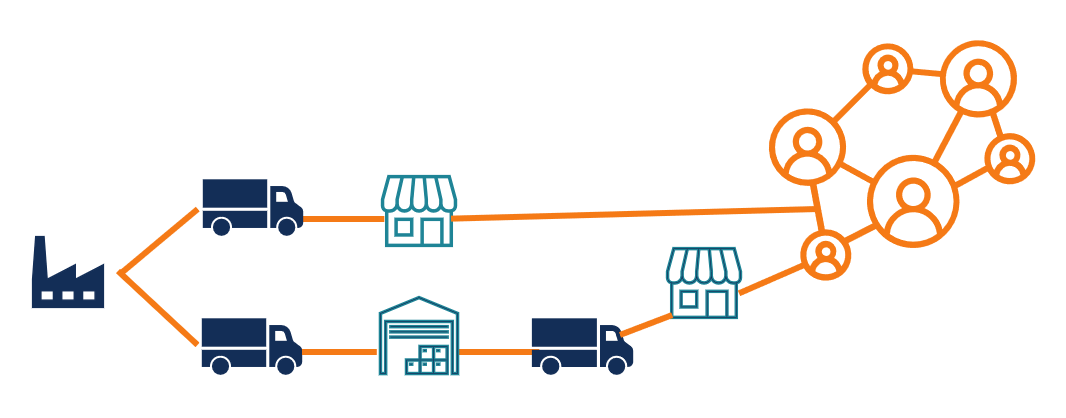





Global supply chains have faced significant challenges in recent years, from geopolitical tensions and transportation delays to changing trade policies and shortages of critical materials. These events have shown businesses that efficiency alone is no longer enough. A supply chain must also be resilient enough to continue operating when unexpected disruptions occur.
For businesses in healthcare, Fast Moving Consumer Goods (FMCG), industrial supply, technology, real estate, and fashion, resilience has become a competitive advantage rather than simply an operational goal. Companies that prepare for uncertainty are often better positioned to protect customers, maintain operations, and respond quickly when market conditions change.
Building a stronger supply chain begins with understanding where vulnerabilities exist and taking practical steps to reduce their impact.
Dependence on a Single Supplier Can Increase Risk
Many businesses work with one supplier because the relationship has been reliable for years.
While this approach may simplify procurement, it can also create challenges if that supplier experiences production delays, financial difficulties, or transportation problems. A single disruption can affect an entire supply chain and interrupt business operations.
Developing alternative sourcing options creates greater flexibility.
Businesses with multiple supplier relationships are often able to respond more quickly when unexpected situations arise.
Visibility Helps Businesses Respond Faster
It is difficult to solve a problem that cannot be seen.
Businesses need clear visibility into supplier performance, inventory levels, transportation progress, and delivery schedules. Access to timely information allows organizations to identify issues early and make decisions before disruptions become more severe.
Digital platforms and reporting tools are making supply chain visibility easier than ever.
Companies that understand what is happening across their supply chains are generally able to respond with greater confidence.
Strong Relationships Improve Supply Chain Stability
Resilient supply chains are built on trust as much as they are built on processes.
Businesses that maintain open communication with suppliers and commercial partners are often better prepared to manage unexpected challenges together. Honest conversations can lead to faster problem-solving and stronger collaboration when circumstances change.
Relationships built over time frequently become valuable assets during periods of uncertainty.
Organizations that invest in partnership development often strengthen the reliability of their supply chains.
Local Expertise Can Reduce Uncertainty
Expanding sourcing activities into unfamiliar markets can introduce new challenges.
Regulations, business practices, and supplier capabilities often differ from one region to another. Businesses that understand these differences are generally better prepared to make informed sourcing decisions.
Many organizations work with Austine & Partners to strengthen supply chain strategies through market intelligence, commercial insight, and access to trusted business networks. Local knowledge often helps businesses identify practical solutions while reducing avoidable risks.
Understanding the market can be just as valuable as understanding the product itself.
Flexibility Supports Business Continuity
No supply chain remains unchanged forever.
Customer demand, transportation routes, supplier capacity, and economic conditions continue to evolve. Businesses that regularly review their sourcing strategies are often better prepared to adapt without disrupting operations.
Flexibility may involve adjusting procurement plans, reviewing supplier performance, or exploring new distribution channels.
The ability to adapt quickly often determines how effectively a business manages uncertainty.
Technology Strengthens Decision Making
Modern supply chains generate large amounts of valuable information.
Inventory systems, procurement software, logistics platforms, and analytics tools help businesses monitor operations more accurately and identify opportunities for improvement. These technologies support faster decisions while reducing dependence on manual processes.
Reliable information enables businesses to act with greater confidence.
Technology becomes most valuable when it supports practical business decisions rather than simply collecting data.
Preparation Creates Long-Term Confidence
Supply chain resilience is developed before disruption occurs.
Businesses that prepare contingency plans, evaluate sourcing strategies, and review operational risks are often better equipped to continue serving customers during difficult periods. Preparation allows organizations to respond calmly instead of reacting under pressure.
Even small improvements made consistently can strengthen overall resilience.
Businesses that prepare today are often better positioned for tomorrow’s challenges.
Beyond Today’s Challenges
Global markets will continue changing, and supply chains will continue facing new pressures. Businesses that strengthen supplier relationships, improve visibility, embrace flexibility, and invest in preparation are often able to navigate uncertainty with greater confidence.
Resilient supply chains are built through informed decisions and practical planning. Through market intelligence, sourcing expertise, and business development support, Austine & Partners helps businesses strengthen supply chain strategies that support long-term operational success.
To explore practical ways to build a more resilient supply chain, connect with the Austine & Partners team at: https://austineandpartners.com/contact/